
 Tiếng Việt


The Science Behind Material Selection
For decades, gold alloys were considered the gold standard of durability. Their mechanical strength, resistance to corrosion, and low biological risks made them functionally outstanding. However, their major drawback was esthetics – a factor that modern patients value more than ever.
This is where the era of all-ceramic materials began. Two categories in particular stand out today:
-
- Lithium disilicate (reinforced glass-ceramic) – renowned for its translucency, lifelike esthetics, and versatility, suitable for veneers, inlays/onlays, and single crowns.
- Zirconia (zirconium dioxide) – recognized for its exceptional mechanical strength, making it ideal for long-span bridges and high-stress posterior regions, while increasingly improving esthetics through multilayer technology.
The most important point: both of these material classes are supported by long-term clinical research, showing that they can match – and even exceed – the standard once set by gold alloys.
IPS e.max – A Proven Icon of Long-Term Quality
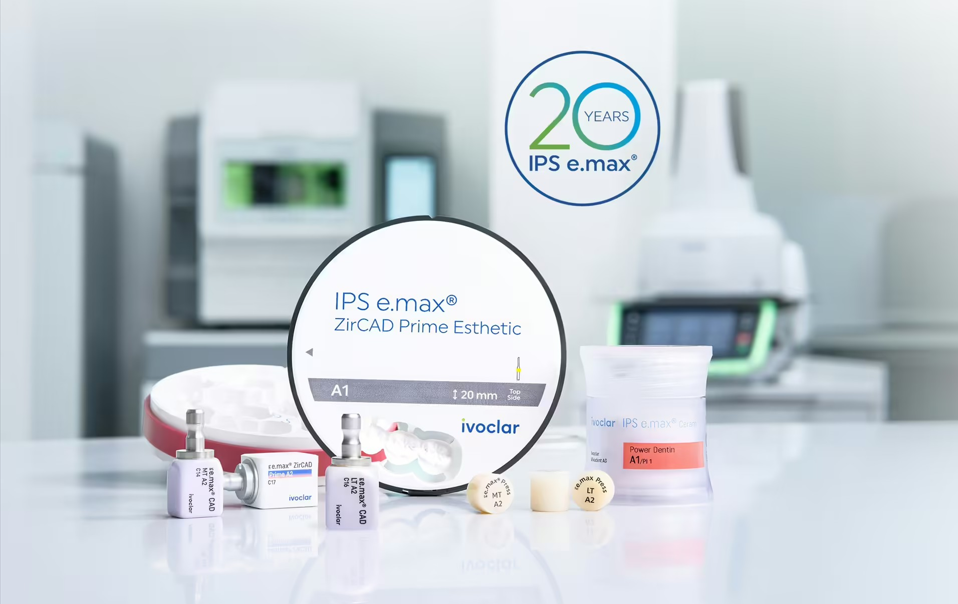
When it comes to modern all-ceramics, IPS e.max consistently leads the way. Not only does it deliver natural esthetics, but it also comes with over 20 years of clinical evidence confirming its reliability.
-
- IPS e.max Press and IPS e.max CAD (lithium disilicate glass-ceramics) have demonstrated survival rates of around 95% in observation periods of up to 17 years – a remarkable achievement in restorative dentistry.
- IPS e.max ZirCAD (high-strength zirconia) has also impressed with a 99% survival rate in clinical studies of up to 5 years, confirming its outstanding durability under real-life conditions.
This proves that IPS e.max is not just a material, but a family of solutions that combines esthetic brilliance with clinical reliability for the long run.
From Materials to a Philosophy of Dentistry
The long-term success of IPS e.max highlights an essential truth: modern dentistry does not accept a trade-off between esthetics and durability. Patients want both – and thanks to advancements in material science, we can deliver both.
More importantly, it reminds us that:
-
- Every material choice affects not only the immediate outcome, but also the patient’s quality of life for many years ahead.
- Every long-lasting restoration becomes a testament to the professional expertise and reputation of both the laboratory and the dental practice.
- Every clinically successful case sows the seeds of trust, building strong, enduring partnerships.
Conclusion: True Quality Means Long-Term Success
In dental technology, technical precision is essential, but never sufficient. Only when a restoration maintains its stability, durability, and esthetics over the years can we truly call it a success.
That is why dentists need laboratories that not only excel in craftsmanship, but also understand materials deeply and recommend the right solution for each case. That is why laboratories need clinically proven, scientifically backed materials such as IPS e.max to build and sustain their reputation.
Ultimately, true quality is not defined by today – but by tomorrow, next year, and even a decade later. And in this long journey, long-term success remains the most reliable benchmark of quality.