
 Tiếng Việt


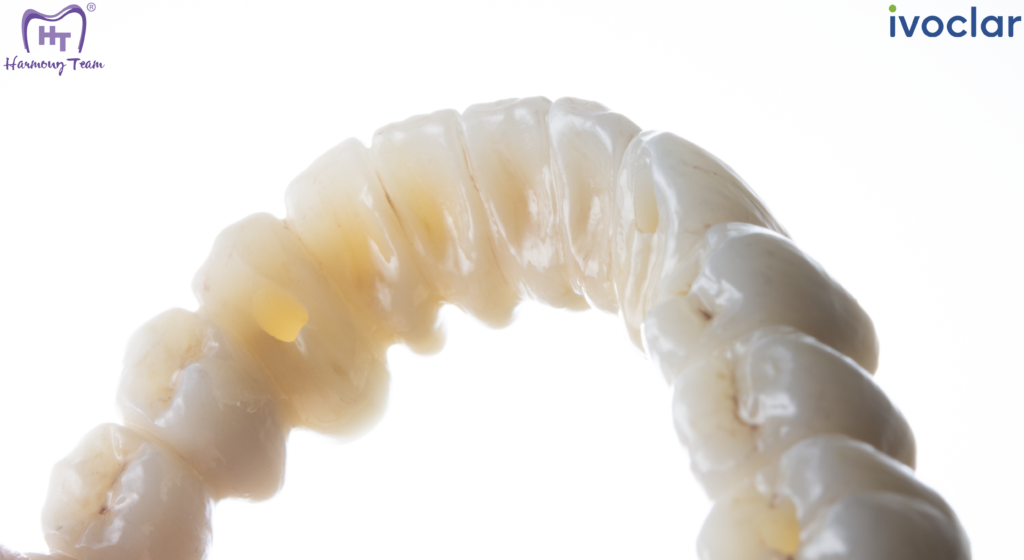
If you are part of a dental team, especially in restorative dentistry, you have probably heard of the term “fracture toughness” – also known as crack resistance. However, many dentists and dental technicians tend to overlook or underestimate this factor when selecting materials. In reality, this is one of the most critical properties that directly determines the long-term durability of restorations, particularly when working with materials such as zirconium oxide (zirconia) or lithium disilicate glass-ceramics.
A dental restoration must not only look esthetic but also remain stable in the oral environment, where it is constantly exposed to chewing forces, changes in temperature, moisture, and mechanical pressure. When microcracks inevitably form – something almost unavoidable with ceramics – the question is: Can the material resist crack propagation? This ability is what fracture toughness is all about.
What is fracture toughness?
Fracture toughness – or crack resistance – is defined as the ability of a material with an existing internal crack to resist the propagation of that crack when subjected to external forces.
In other words, it tells us:
- How much force is required for a small crack to continue expanding and ultimately cause material fracture.
- The higher the value, the greater the resistance against crack propagation → the lower the risk of catastrophic failure.
Clinical implications:
- High fracture toughness = longer-lasting restorations.
- Low fracture toughness = higher risk of early failure and fracture.
Fracture toughness is expressed in MPa·m^1/2.
For example:
- A material with a fracture toughness of 5 MPa·m^1/2 is far more resistant to crack propagation compared to one with only 2 MPa·m^1/2.
- In the oral cavity, this difference can determine whether a multi-unit bridge lasts 10 years or fails after just 3–4 years.
Comparing fracture toughness among materials
Let’s look at some common materials:
- Titanium alloys and steel: Very high fracture toughness, often exceeding 50 MPa·m^1/2. These materials are rarely at risk of cracking under heavy loads.
- Concrete: Despite being used for houses and bridges, concrete has a very low fracture toughness of only 0.2–1.4 MPa·m^1/2. Because of its brittleness, it usually needs steel reinforcement.
- Dental ceramics: This group falls in the medium range. Among them, zirconium oxide shows the highest fracture toughness – but even within zirconia materials, values can differ greatly.

Specific examples:
- IPS e.max ZirCAD Prime: approx. 5 MPa·m^1/2 in the dentin zone – significantly higher than many conventional zirconia materials.
- Other zirconia materials: sometimes only around 2 MPa·m^1/2.
This means: Not all zirconias are created equal. Choosing the right type directly impacts the clinical longevity of restorations.

Translucency vs. Fracture Toughness – A Common Trade-off
An interesting (and challenging) fact in dental materials:
- Opaque zirconia → generally has higher fracture toughness.
- Translucent zirconia – often preferred for esthetics – tends to have lower fracture toughness.
Examples:
- IPS e.max ZirCAD LT and MO (more opaque) → higher fracture toughness.
- IPS e.max ZirCAD MT and MT Multi (more translucent) → lower toughness, but still relatively strong compared to many alternatives.
Therefore, material selection is always a balance between:
- Esthetic demands (shade, translucency)
- Mechanical demands (load-bearing, crack resistance)