
 Tiếng Việt


In the long term, classical craftsmanship and dental technical expertise will always remain indispensable in dental technology. However, as an experienced dental technician, you can use digital working steps to enhance your manual skills and make your processes more reliable. Learn more about the advantages of a clever collaboration between conventional processes and CAD/CAM in
Author Archives: Dental HT

So you need a new furnace? But you’re uncertain about the model. What should you take into consideration when buying a new furnace? The point of departure is set. The selection is immense. Making a decision is difficult. This does not have to be. The following five considerations will make your choice much easier –
Uncategorized
DIGITAL LAB – FROM FEATURES TO EARNING (PART 1)

When you decide to invest in a digital lab, it should be a well-considered decision, taken with a long-term perspective in mind. For your investment in a digital lab to be worthwhile over time, it’s crucial to strategically link up and integrate equipment, software and material into your daily operations. What should you prioritize in
Uncategorized
DIGITAL LABO – FROM FEATURES TO EARING (PART 2)

Ensuring data integrity and seamless connectivity In a digital workflow, data is key. One of the most important considerations is how data moves seamlessly and reliably between different systems and devices without any loss. When datasets can be smoothly transferred from one stage of the workflow to the other, it significantly boosts your efficiency. This,

Every dental technician who works with CAD/CAM machines and zirconia discs in a laboratory knows the problem: loading a new disc in the machine must be carried out carefully, and usually using both hands so that the disc is properly secured, and the machine properly loaded. Using a quick clamping system to do this can
Uncategorized
EFFEICIENCY THROUGH INNOVATIVE MATERIAL PROPERTIES

In developing innovative dental materials, Ivoclar consistently sets new benchmarks in the dental field. For instance, take the two zirconia discs IPS e.max ZirCAD Prime and IPS e.max ZirCAD Prime Esthetic. These materials combine two types of zirconium oxide with different properties in one disc, thereby unlocking a very broad spectrum of applications. They are

As digital dental technologies have become established in dental laboratories, the processes using these technologies have become more efficient: Scanners, materials and milling machines work together like clockwork in the digitally enhanced fabrication of restorations – reducing the potential for errors in daily lab operations and boosting the quality and throughput of the laboratory. Encased
Uncategorized
A BRIEF HISTORY OF A GREAT INVENTION (PART 1)
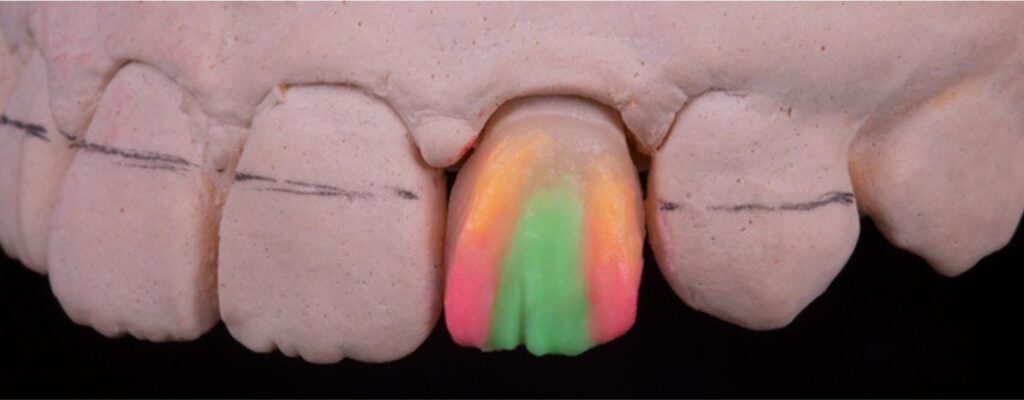
Have you ever wondered how long ceramics have been used in dental laboratory technology? What are some of the innovation milestones in the history of dental ceramics? And why do we have different types of ceramics (metal-based ceramics and all-ceramics)? Read on, to find out how dental ceramics have evolved since their beginnings and what

2000 to 2015: Pressing, milling, cutting and the trend to monolithic restorations Digital techniques for processing dental ceramics started entering dental practices in the mid 1980s. In dental laboratories, the trend towards digital procedures manifested itself around the year 2000. Since then this technology has made considerable inroads in dental laboratories, so that nowadays digitally
Uncategorized
THE BEST CHOICE FOR METAL CERAMIC RESTORATION (PART 2)

The IPS Style layering materials for the traditional multi-layer technique considerably simplify routine procedures. The single-layer ceramic IPS Style Ceram One further enhances the efficiency of the laboratory. Its dentin and incisal materials are optimally coordinated with each other to enable a straightforward method for the fabrication of full-contour metal-ceramic restorations – for restorations with
